

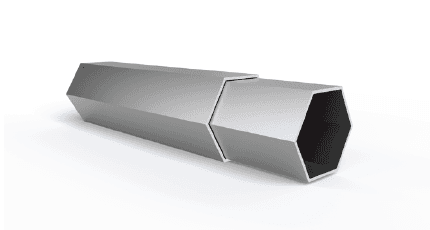
ALU45
Hexagonal extruded aluminium, 45mm.
The entry frame. Casual-to-regular use, without dropping to consumer-grade kit.
The frame ladder
Every LP Tent range shares the one-piece umbrella frame — it opens and locks in under a minute, with no loose poles. What changes as you move up is the section, the connectors, and the hardware that takes the handling.
Hexagonal extruded aluminium, 45mm.
The entry frame. Casual-to-regular use, without dropping to consumer-grade kit.
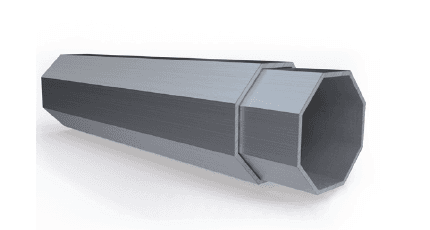
Octagonal aluminium, 60mm.
The councils-and-public-bodies workhorse. Tested to strong winds, built for everyday event use.
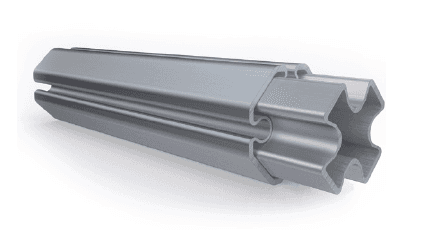
Grooved anodised aluminium, Ø42mm, 2mm wall.
The flagship handling frame: self-locking triggers, reinforced scissors, fibreglass connectors, sliding walls, steel foot plates.
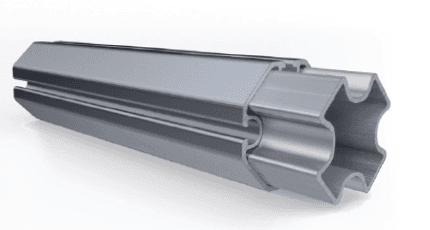
Grooved anodised aluminium, Ø50mm, 2mm wall.
High-end and large-span. Effortless locking levers, semi-permanent capable.
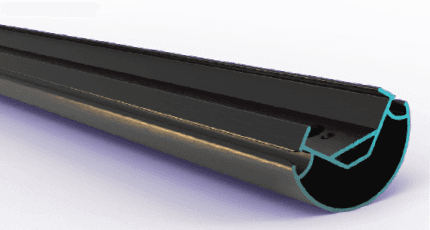
Round charcoal powder-coated aluminium, Ø75mm.
The premium top of the range. Wheels and double-axis sliding walls; finish you put in front of guests.
Engineered, not assembled
Pick up a frame and the difference is in the hardware. These are the load-bearing details that separate a structure from a folding novelty.
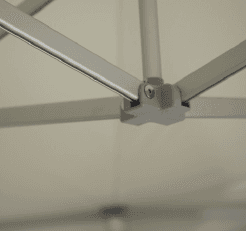
Glass fibre reinforced connectors carry the joint loads — not the plastic clips a garden gazebo relies on.
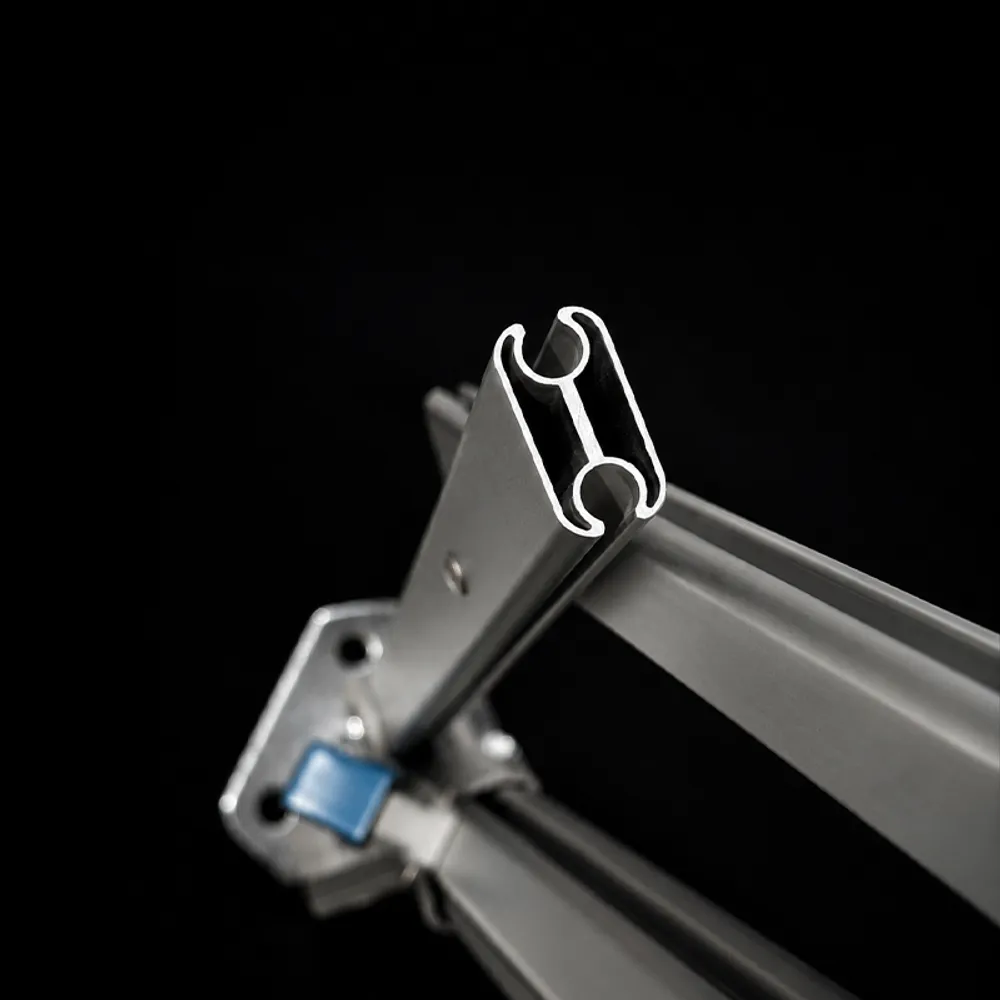
Doubled scissor arms spread the roof load across the frame, so the span holds its shape under canopy tension.
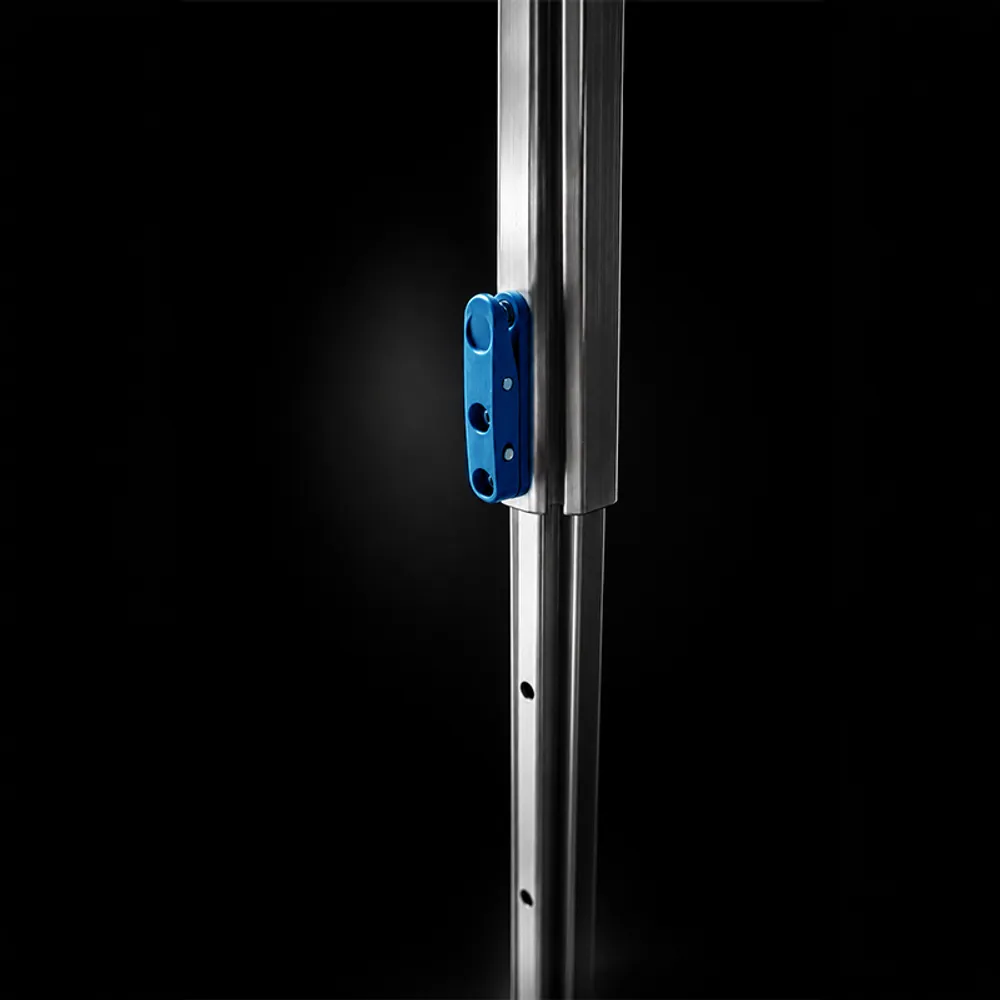
Each leg locks its height positively on a trigger or lever — no push-pins to slip, no guessing whether it caught.
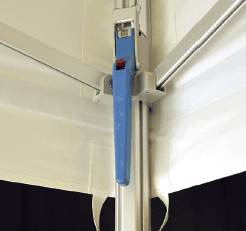
On the heavier ranges, a single lever sets and releases the leg height — quick on a busy set-up, secure once locked.
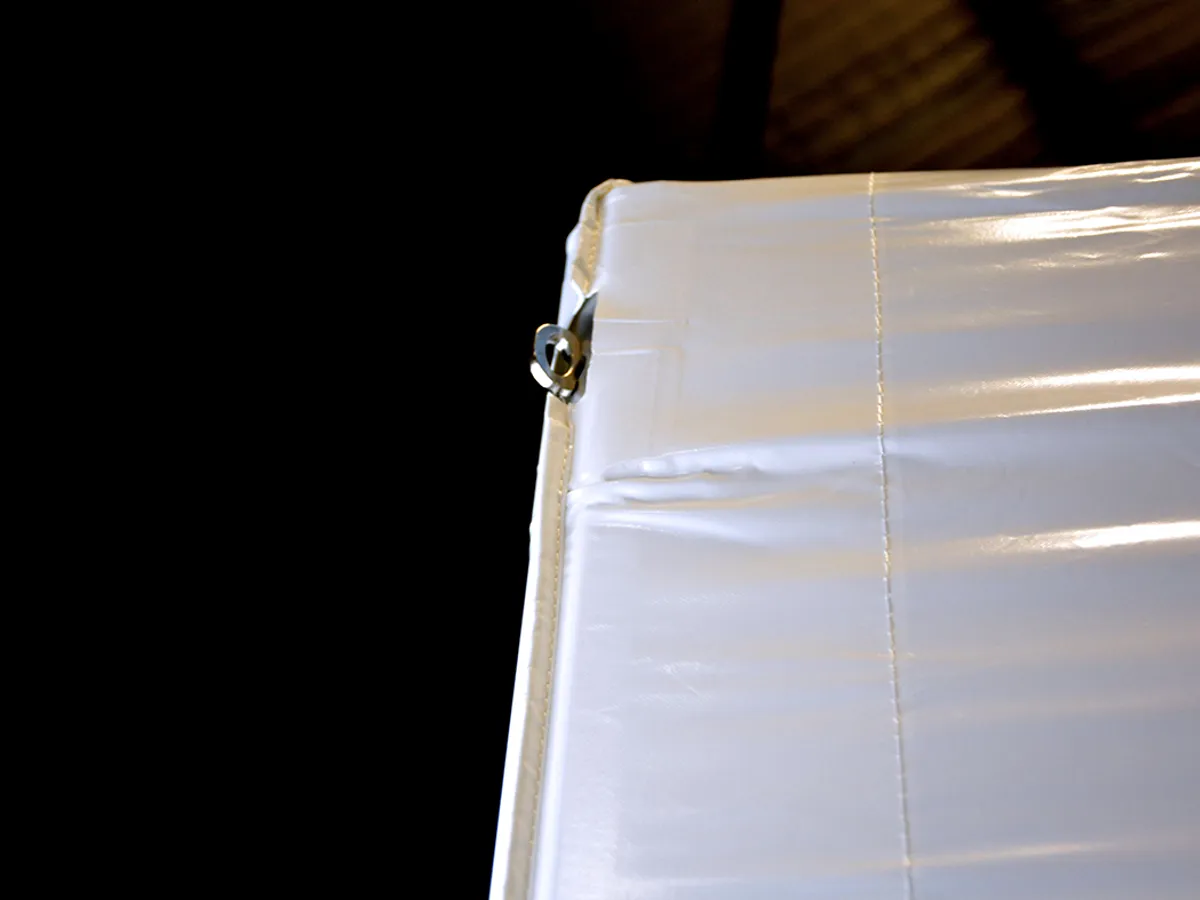
Tie-down points are built into the frame, not bolted on as an afterthought — anchoring is part of the structure.
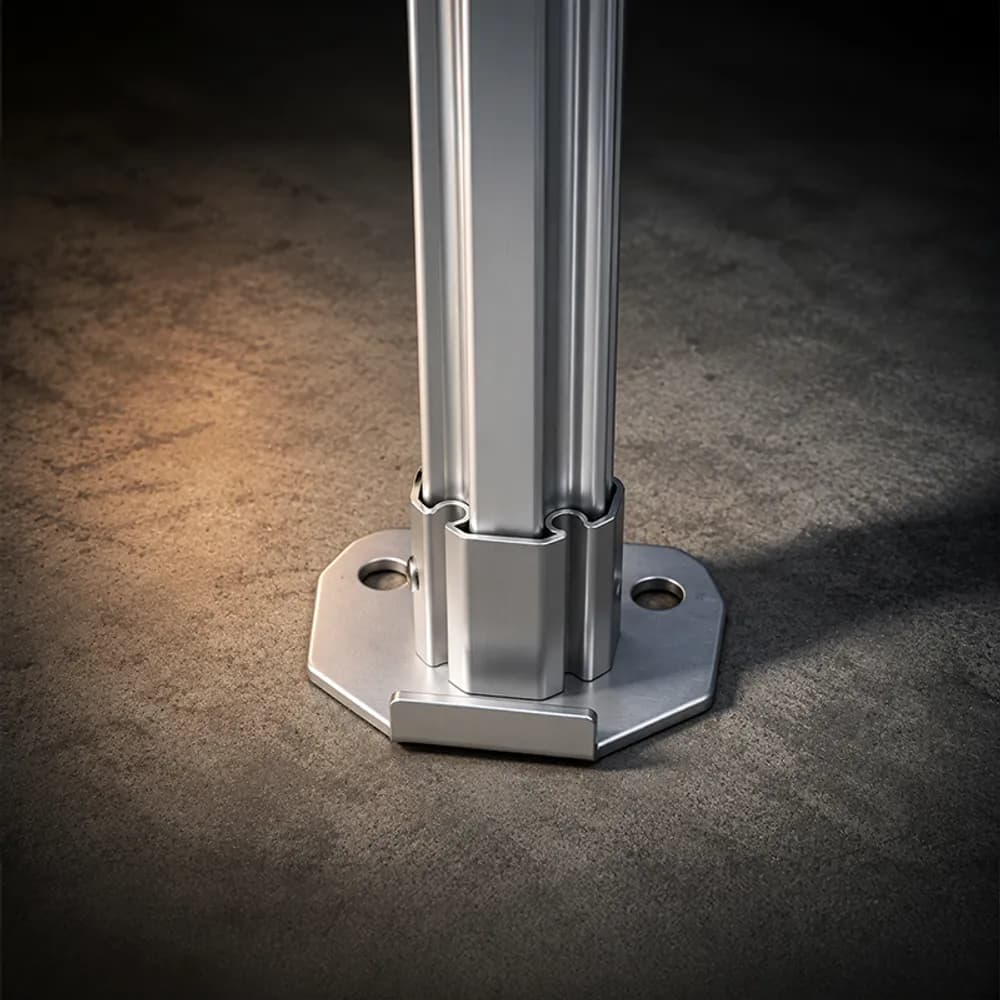
Each leg stands on a foot plate with fixing holes for stakes, spreading the load on soft ground and giving a fixed point on hard standing.
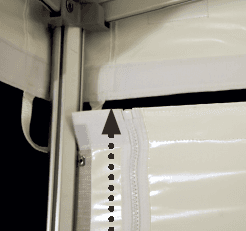
Walls travel on the frame itself, so printed branding stays taut and square. No velcro, no sag.
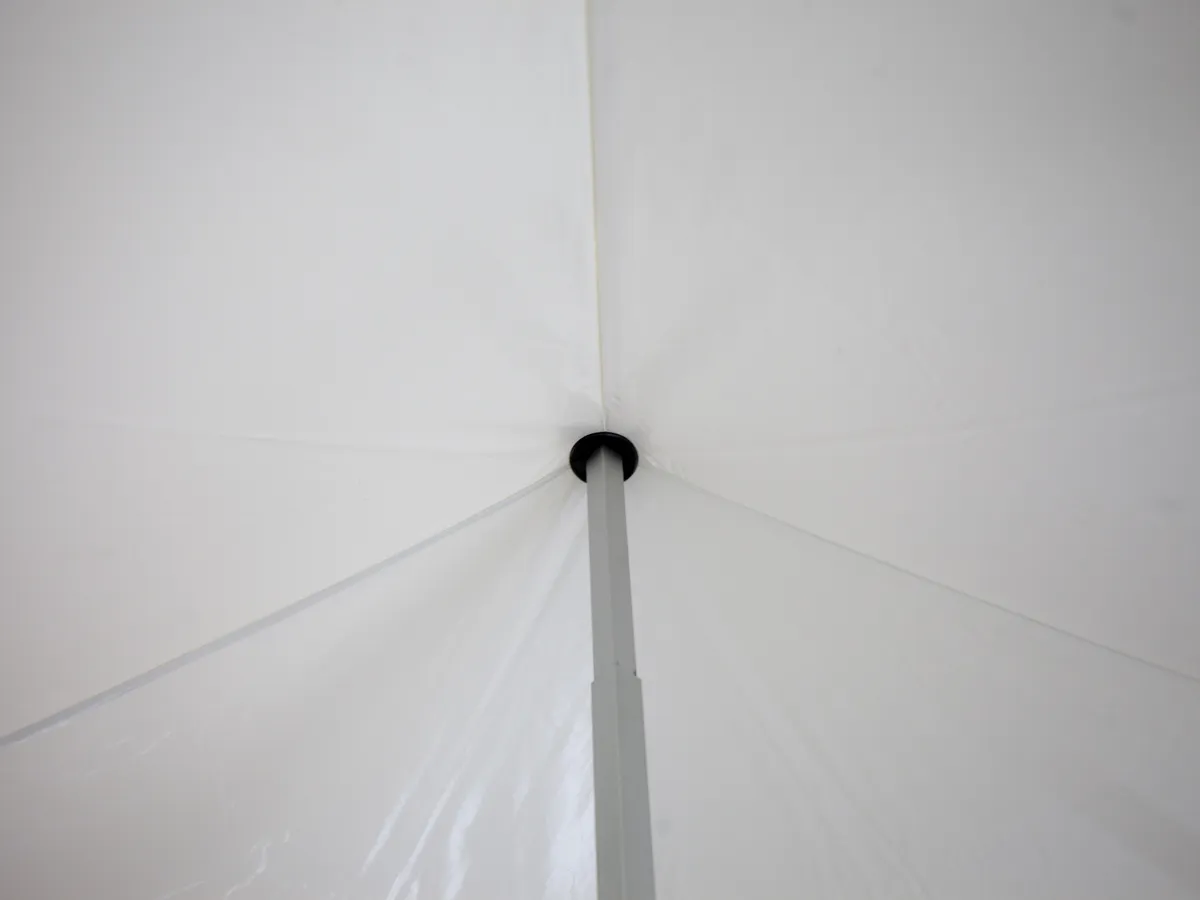
The canopy peak is reinforced where the centre pole meets the fabric, the point that takes the most wear and the most wind.
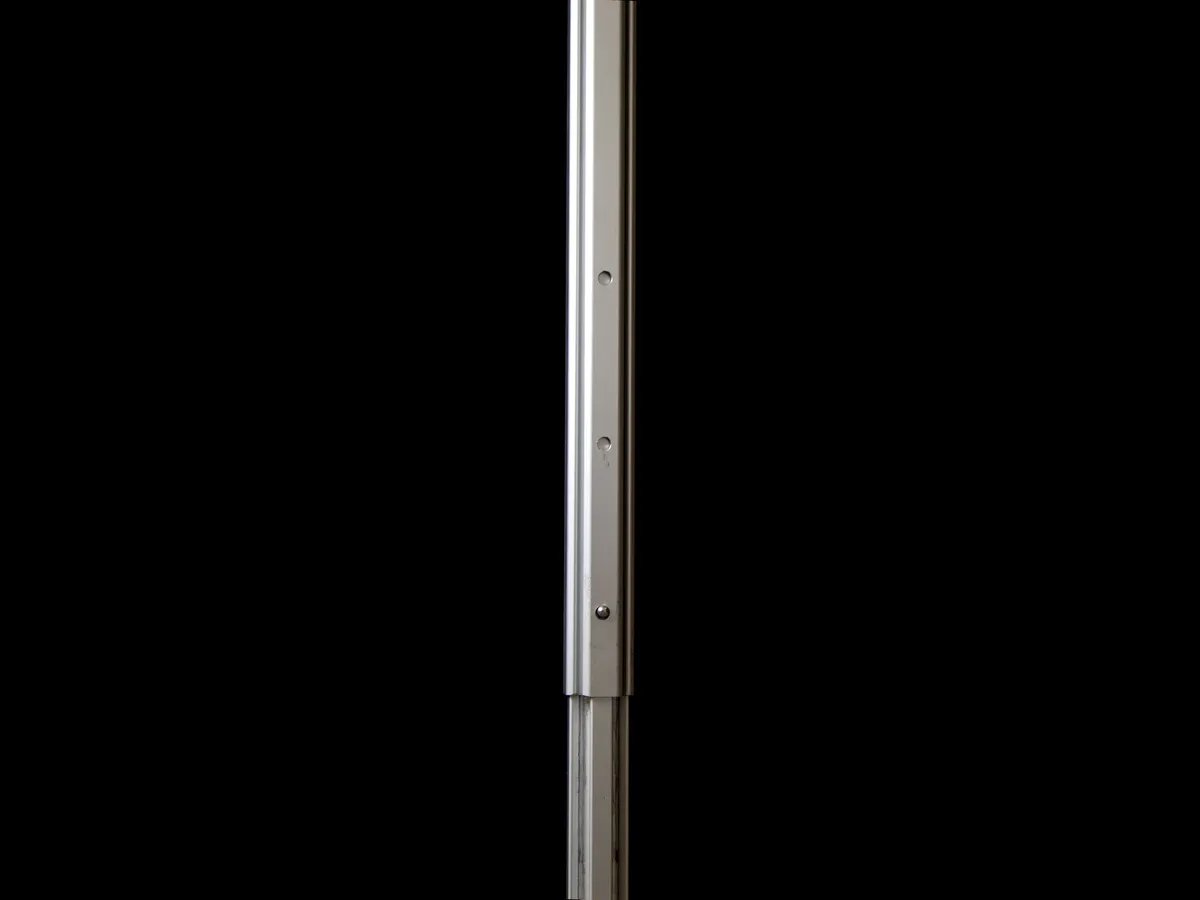
Extruded anodised aluminium legs with the height stops machined in, so the trigger locks into the profile itself, not a bolt.
What sets a real frame apart
The two look similar folded in a bag. They behave nothing alike once the canopy is up and the wind picks up.
| Component | LP Tent frame | Typical cheap hex gazebo |
|---|---|---|
| Frame | Extruded tempered aluminium (EN 573 alloy) | Thin powder-coated steel tube |
| Joints | Glass fibre reinforced connectors | Plastic clips |
| Scissors | Reinforced double arms | Single thin arms |
| Height lock | Self-locking triggers and levers | Push-pins |
| Anchorage | Integrated tie-down rings | None |
| Walls | Sliding walls on the frame | Velcro, or none |
The profile is the frame. Wall thickness, diameter, and section shape set how much load the structure carries and how it behaves in wind. A 45mm hexagonal section suits regular use; a Ø75mm round powder-coated section is built for repeated, high-visibility setups. The profile is what you are really buying.
The LP Tent ranges climb a ladder of engineering. ALU45 is the entry frame for casual-to-regular use. CO is the octagonal 60mm workhorse for councils and everyday events. XP adds self-locking triggers, reinforced scissors, fibreglass connectors, and sliding walls. ZP steps up to a Ø50mm grooved frame with locking levers and semi-permanent capability. GP is the premium top of the range — Ø75mm charcoal powder-coated, wheels, double-axis sliding walls.
Under a minute. The frame is one piece — an umbrella that opens and locks, with no loose poles to thread or lose. One person can raise a smaller frame; the locking triggers hold the height the moment they catch.
Yes. The frames are hard anodised silver aluminium, with charcoal powder coating on the GP, engineered for repeated outdoor deployment across seasons. Wind performance depends on the range, the anchoring, and the site — the heavier ranges are tested to strong winds, and integrated anchorage rings are built in for tie-down. Tell us the application and your specialist confirms the right frame.
Tell us the application, the space and the requirements. Your specialist confirms the right setup, documentation and quote within 1 business day.