

Water bag
45 kg eachindicative £21 each
Lowest cost, easy transport.
Travels empty, so it is light to carry to site, then you fill it from a tap or bowser. Cheapest per kilo by a distance, as long as you have water and time on the day.
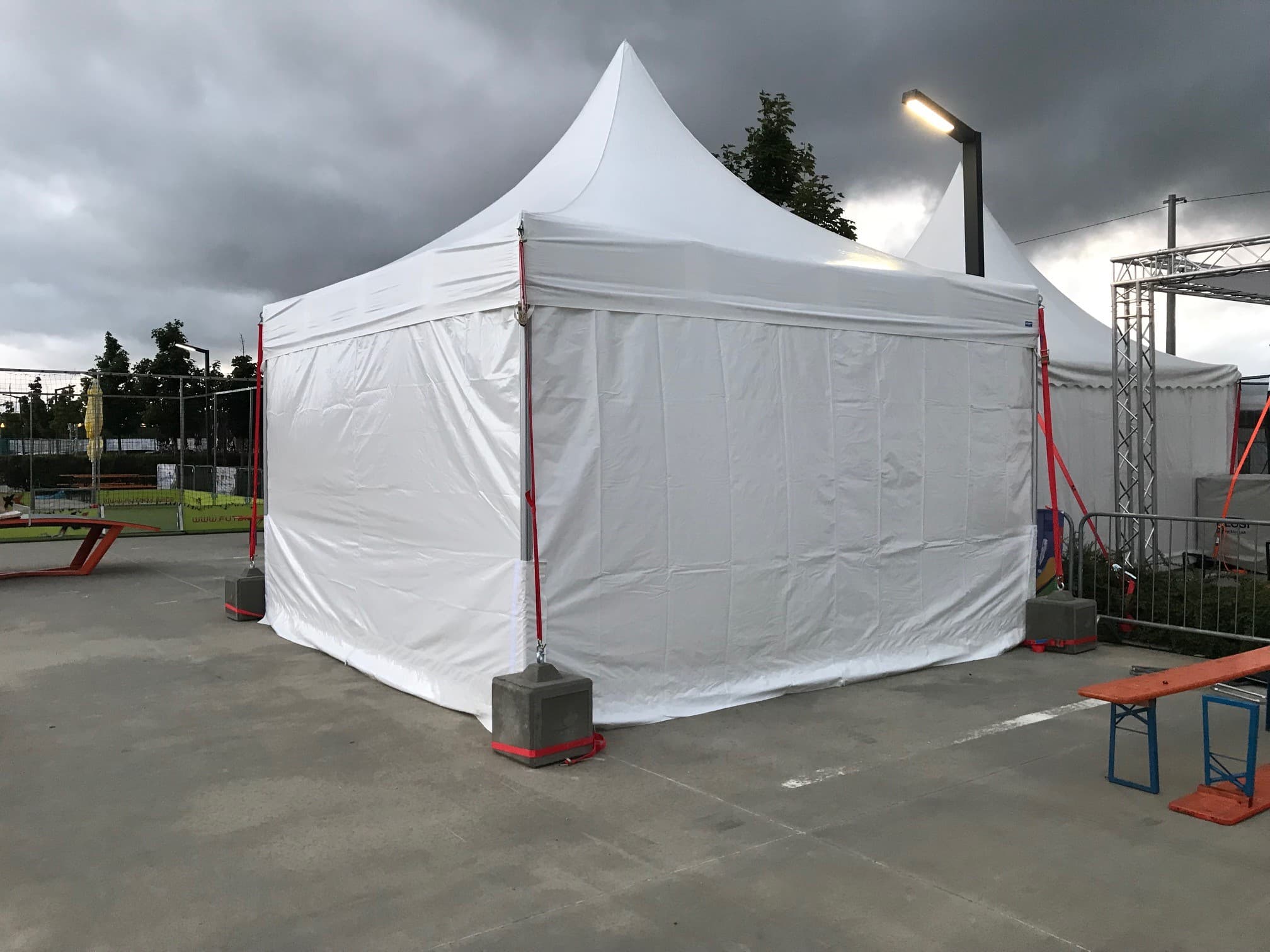
Tarmac, concrete, paving and concourses
Weight on every leg where a peg cannot go: water bags, cast iron plates or concrete blocks, sized to your gust.
Get a Quote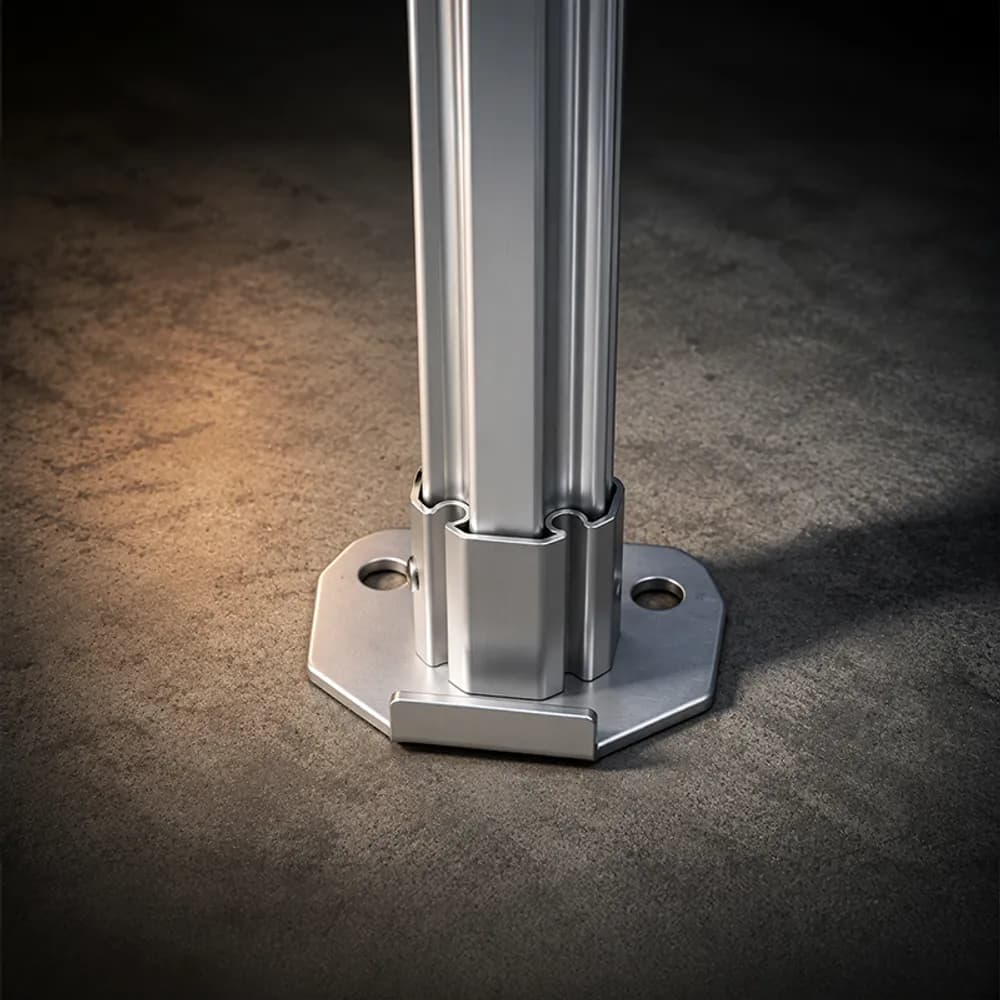
Grass, fields and soft ground
Stakes through the foot plate and into the ground. The certified figure is 150 kg of pull-out on each leg.
Get a Quote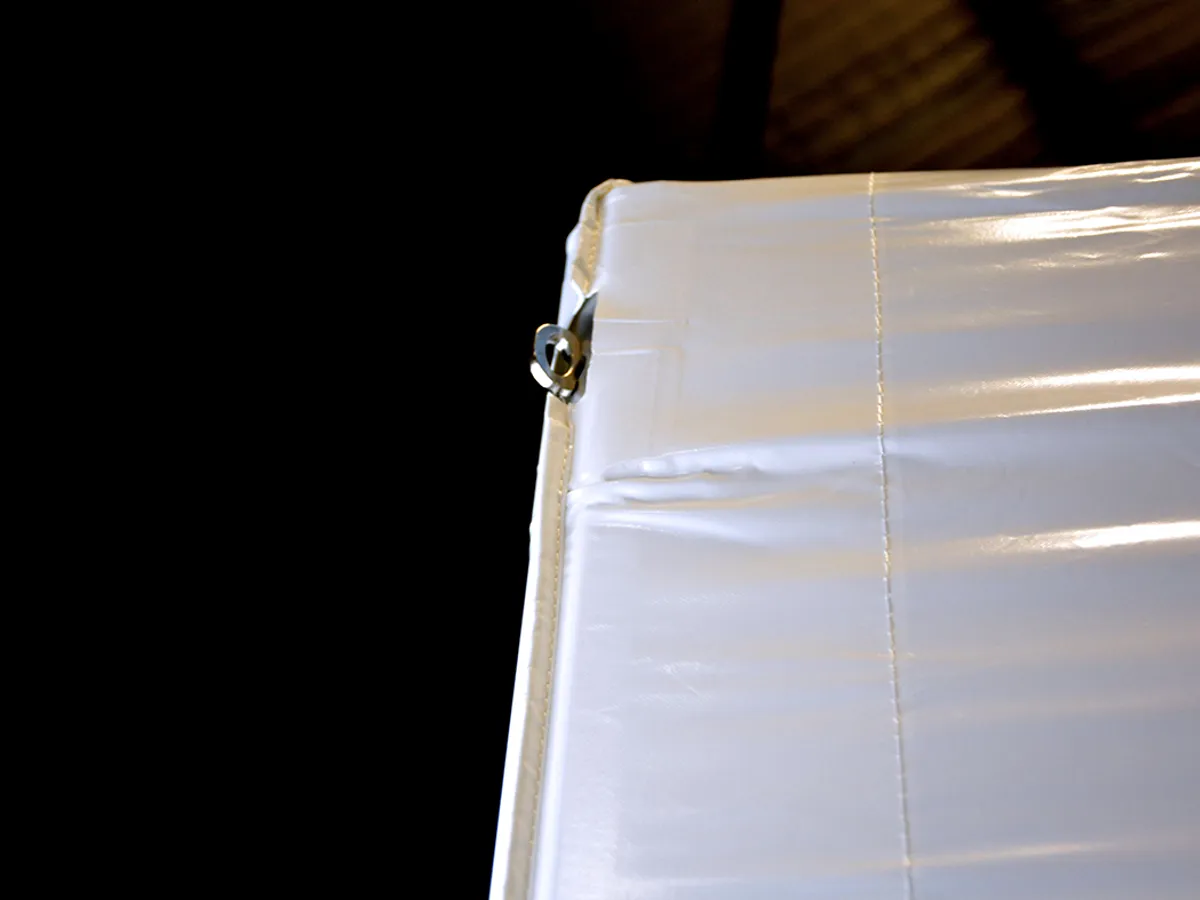
Every pitch, whatever the ground
Straps from the frame's tie-down points to the ballast or the stakes, so the load goes into the anchor and the canopy stays square.
Get a QuoteTell us the frame, the size and the surface, and your specialist specifies the anchorage for your site. Your quote comes back within 1 business day.
How much weight
1.61 kg
per leg, for every mph of gust.
Take the strongest gust you expect, not the average wind, and put 1.61 kg of ballast on each leg for every mph of it. A four-leg gazebo facing a 40 mph gust needs roughly 65 kg holding down each leg. Always size to the gust; the average tells you nothing about the moment the wind tries to lift the canopy.
In metric the rule is cleaner: 1 kg per leg for every 1 km/h of gust. We lead in mph because that is how UK forecasts and frame ratings are quoted (1 km/h ≈ 0.621 mph, so 1 mph ≈ 1.61 kg).
Then count the legs: four on a 3x3, a 3x4.5 or a 4x4, and six on a 3x6.
The certified figure
The frames are 60mph wind certified (with appropriate anchorage), and LP Tent sets that anchorage at 130 kg of ballast on each leg on hardstanding, or, on soft ground, stakes that resist 150 kg of pull-out per leg. The rule above sizes ballast for lighter days. When you rely on the rating, the certified figure is the floor.
The frames this applies to, and our Buyer's pack, are on our heavy duty gazebos page.
Why anchoring matters
LP Tent frames are verified to French CTS 7 at 100 km/h, and CTS 7 exceeds BS EN 13782. CO, XP, ZP, Pagode and GP frames are 60mph wind certified (with appropriate anchorage): ballast or stakes matched to the ground are what hold that rating in place on the day.
The three ways to add weight
There are three practical ways to put weight on a leg. The right one comes down to your budget, whether you have water on site, and how much handling you want to do. Prices are an indicative guide, not a quote.
Lowest cost, easy transport.
Travels empty, so it is light to carry to site, then you fill it from a tap or bowser. Cheapest per kilo by a distance, as long as you have water and time on the day.
Tidy, no filling, fast to drop in.
Stacks onto the foot with no setup and no mess: the clean choice. Use at least two per leg. The priciest per kilo, and the easiest to live with.
Full weight, ready to use.
Comes out of the van at full weight with nothing to fill, which suits a site with no water. Mid-priced, and heavy to move, so plan the handling.
Work out your weight
Enter the strongest gust you expect, how many legs your gazebo has, and the ballast you want to use. The weight per leg is the number that matters; the indicative cost is a rough guide, not a quote.
Weight needed per leg
65 kg
On each of 4 legs, for a 40 mph gust (64 km/h). Total across the gazebo: 260 kg.
2 per leg · 8 in total (45 kg each)
| Ballast | Per leg | Total | Indicative cost |
|---|---|---|---|
| Water bag | 2 | 8 | £168 |
| Cast iron plate | 5 | 20 | £1,380 |
| Concrete block | 2 | 8 | £496 |
Weights are the rule applied to your gust. Costs are an indicative guide only. Tell us your setup and your specialist confirms the price.
Scope
The rule and the calculator on this page are for pop-up gazebos and frame tents, the kind that open, lock and take ballast on each leg. Large or traditional marquees are a different structure: they carry wind load through a frame and ground anchors engineered for the specific span, site and exposure. Tell us the span and your specialist works out the anchorage with you.
About 1.61 kg per leg for every mph of the strongest gust you expect, or 1 kg per km/h if you work in metric. A four-leg gazebo in a 40 mph gust needs roughly 65 kg on each leg. For the full rating the figure is 130 kg per leg on hardstanding, or stakes with 150 kg of pull-out on soft ground.
With ballast on every leg: water bags, cast iron plates or concrete blocks on the foot plate, and a ratchet strap from the frame to each weight. A peg cannot go into concrete, so the weight does the holding. The full rating takes 130 kg per leg.
Anchor every leg to the strongest gust in the forecast: ballast on hardstanding, stakes on grass, and ratchet straps from the frame to each anchor. Size to the gust, never the average.
Stakes, wherever the ground holds them: the certified figure on soft ground is 150 kg of pull-out per leg. Where the turf has to stay untouched, ballast on each leg does the same job.
Yes. A strap ties the frame to the weight or the stake, so the load goes into the anchor rather than resting on the foot. We supply ratchet straps and tie-downs.
Yes, when they reach the weight. A 45 kg water bag covers one leg to a gust of about 28 mph, so stronger days take more than one per leg, and the full rating takes 130 kg per leg. The calculator shows the count.
It means each leg is held to LP Tent's certified figures: 130 kg of ballast per leg on hardstanding, or stakes resisting 150 kg of pull-out per leg on soft ground. At those figures CO, XP, ZP, Pagode and GP frames are 60mph wind certified (with appropriate anchorage). The frames are verified to French CTS 7, which exceeds BS EN 13782.
The gust, every time. The average tells you how the day feels; the gust is the load the frame actually has to hold. Take the highest gust in the forecast for your site and weight to that.
No. The per-leg rule is for pop-up gazebos and frame tents. A large or traditional marquee carries wind load differently and needs anchorage engineered for its span, site and exposure. Tell us what you are pitching and your specialist works it out with you.
Water bags if cost matters most and you have water on site. Cast iron if you want a clean, fast pitch with nothing to fill: use at least two per leg. Concrete blocks for full weight straight out of the van where there is no water. The calculator shows the count and indicative cost for each.
Tell us the application, the space and the requirements. Your specialist confirms the right setup, documentation and quote within 1 business day.