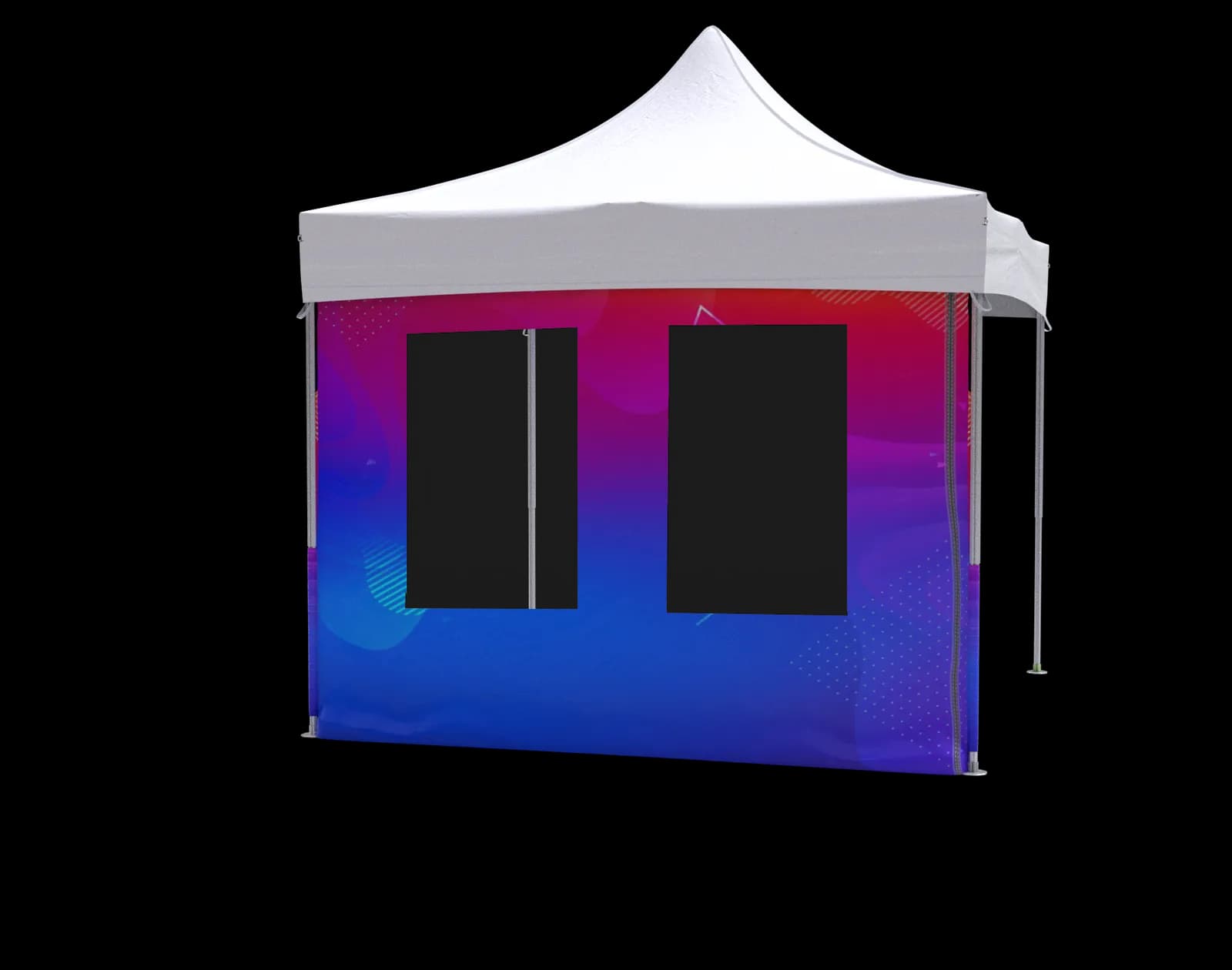
Brand work

Printing & branding for event structures & gazebos

Printing.

Event structures often fail commercially when the print looks soft, the colours feel off-brand, or the artwork is treated as an afterthought. Printing should be specified with the same care as the structure.

What your setup needs

Brand accuracy

For public-facing tents, flags, counters, banners, and inflatables, print quality is not decorative. It affects whether people trust the whole installation. Small text should remain readable, logos should feel crisp, and photographs should not look muddy or blurred when viewed at event distance.

Direct printing onto suitable PVC materials can be a strong method for branded event structures because it supports crisp artwork, photographic detail, and outdoor use. The final result still depends on supplied artwork, proofing, the chosen substrate, ink system, finishing, and how the product will be used.

Critical brand colours should be managed through references and proofing rather than guesswork. A responsible specification should confirm the colour target, artwork files, material, lighting assumptions, and any sample approval needed before production.

The safe specification is method-led, not slogan-led: PVC, polyester, mesh, inflatable PVC, and replaceable panels each need the right print system. A method that works well on a polyester flag may be wrong for a PVC canopy, and a method that suits a banner may not be right for a folded fabric wall.
Method choice

Print methods

The right method depends on material, use, artwork, quantity, and the level of brand control required.

PVC print

Solvent, eco-solvent, latex, flexible UV, and related direct-to-PVC methods can suit banners, PVC panels, inflatable PVC, and canopy materials when the media is compatible.

Dye sublimation

Well suited to polyester fabrics, flags, and full-colour textile graphics. It is not a PVC process, and crisp text depends on artwork, fabric stability, heat, and handling.

Cut vinyl and transfers

Useful for simple marks and lettering, but less suitable when a customer needs full photographic images, complex gradients, or large areas of finely detailed artwork.

Screen printing

Can suit repeat runs with controlled colours and simple artwork, but setup and artwork constraints make it less flexible for one-off event structures and complex brand systems.

Latex printing

Often used for PVC banners and flexible display graphics. It can be lower odour than solvent methods, but media quality, profiles, heat settings, and exposure still matter.

Flexible UV

Can produce sharp dots and fast curing on suitable coated or flexible media. Standard UV inks are not automatically suitable for folding, rolling, or stretching.

Before production

Proofing checklist

Supply vector logos where possible, plus high-resolution images at the final print size.

Confirm brand colours with references such as Pantone, CMYK, RGB, and any existing brand artwork.

Check the print material, coating, texture, and expected lighting before approving critical colours.

Use artwork proofs, and request a sample or production proof when exact colour presentation is mission-critical.

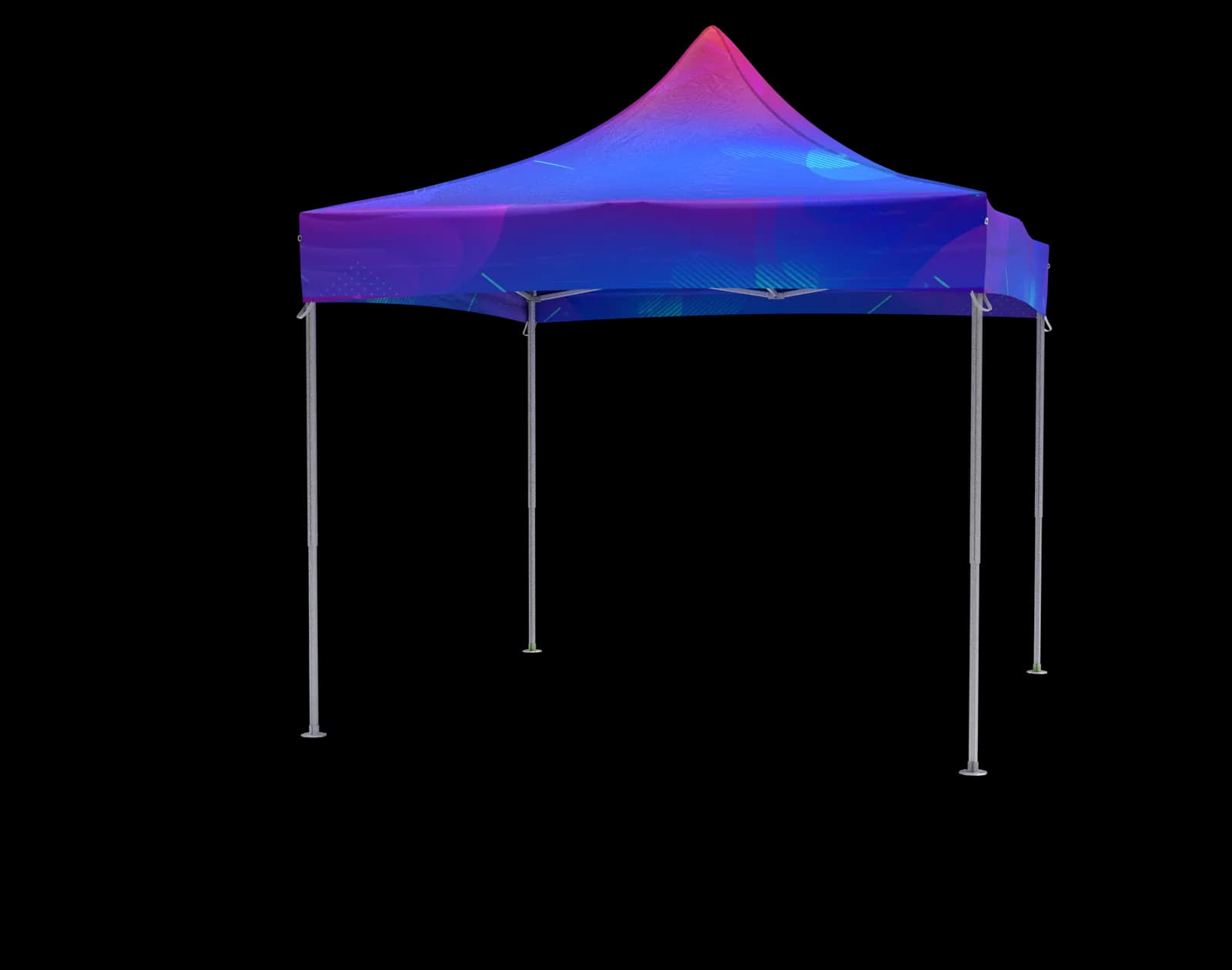
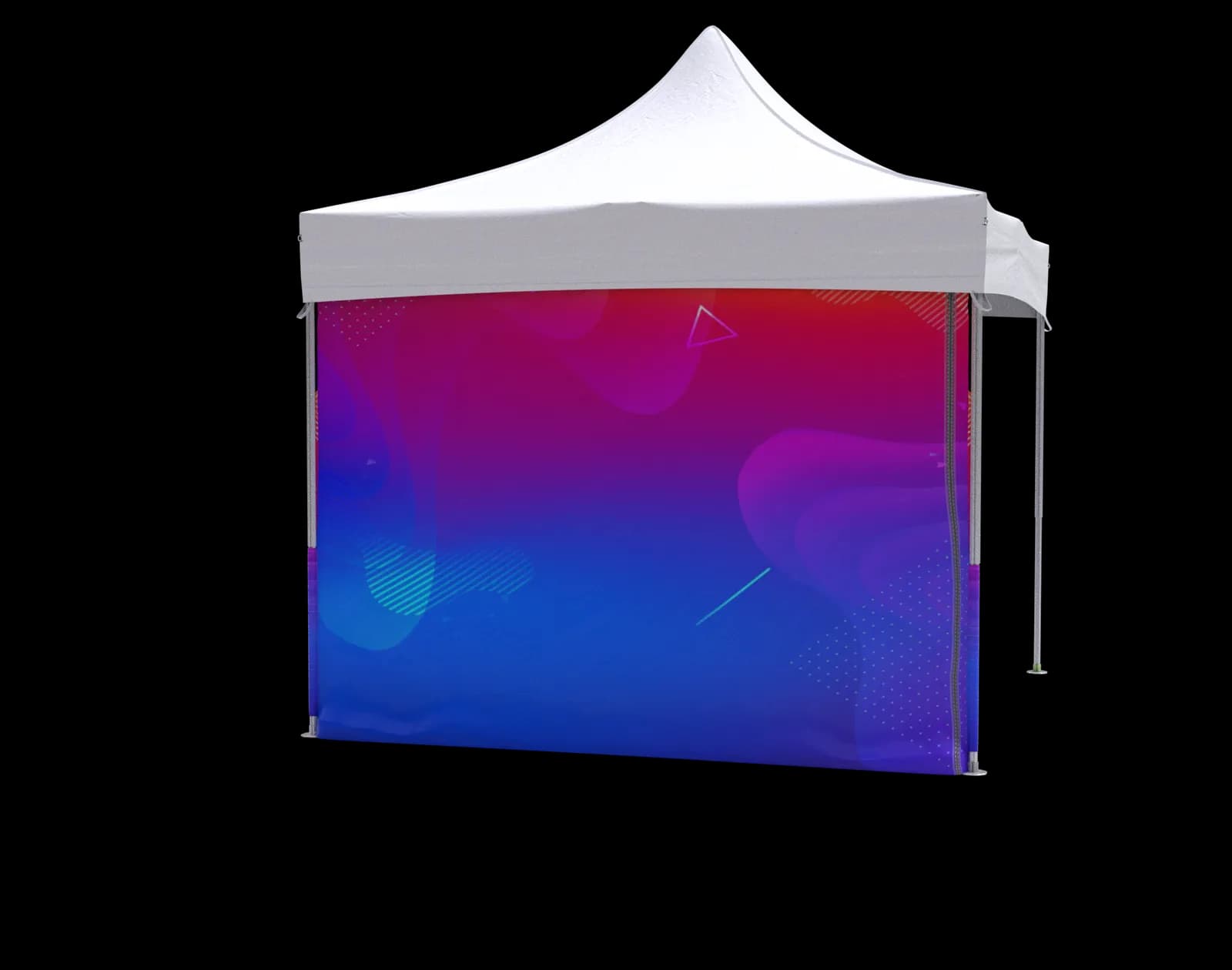
Confirm which panels are printed: roof, valance, front triangle, walls, counters, flags, banners, arches, or furniture.

Confirm whether the finished product needs flame-retardant documentation, and check whether the certificate applies to the printed assembly or base material.

Plain English

Useful promises

Good print promises are specific: sharp artwork, careful proofing, brand colour matching, material-appropriate print methods, and production checks before the product is made. Avoid vague claims such as “perfect forever” or “guaranteed exact colour in every light”. Outdoor colour is affected by material, ink, exposure, cleaning, and the way people view the finished structure.

Say this

Pantone-targeted matching, physical proofs for critical colours, UV-resistant print options, substrate-appropriate methods, and flame-retardant materials with documentation where specified.

Avoid this

Exact colour guaranteed in all conditions, will never fade, fireproof, scratch-proof, or any claim that the finished printed assembly is certified unless the document explicitly covers it.